
Open-Cut Trenching or Directional Boring? Matching the Method to Your Job Site
July 30, 2026
Quick Answer: Open-cut trenching digs a continuous open trench along the full utility route, then backfills and restores the surface once the line is in. Directional boring installs the line from a small entry pit to a small exit pit, threading it through the soil without disturbing the ground in between. The right method depends on what sits above the route, the soil and depth, the bore geometry, and the schedule. On a Piedmont job site, red clay, rock and hardpan, and wet weather often decide it, so the choice is best made route by route rather than by habit.
Stand at the edge of a job site with a cable run that has to cross a finished parking lot and reach a pad on the far side, and the method question answers part of itself. You can either saw-cut and trench straight across that pavement and rebuild it after, or you can bore under it and leave the surface untouched. For contractors, developers, and site managers, that choice, open-cut trenching or directional boring, shapes the schedule, the surface restoration, and how much of the site you tie up while the work runs.
We have spent 25 years putting utilities in the ground across the Triad and beyond, and the honest answer is that neither method wins every time. Each one is the right tool for certain conditions and the wrong tool for others. What follows is how we think through the decision on a working site, and how Piedmont ground tends to tip it one way or the other.
How Each Method Puts a Line in the Ground
The two methods reach the same end, a utility installed at the right depth, but they get there in fundamentally different ways, and that difference drives everything else.
Open-cut trenching
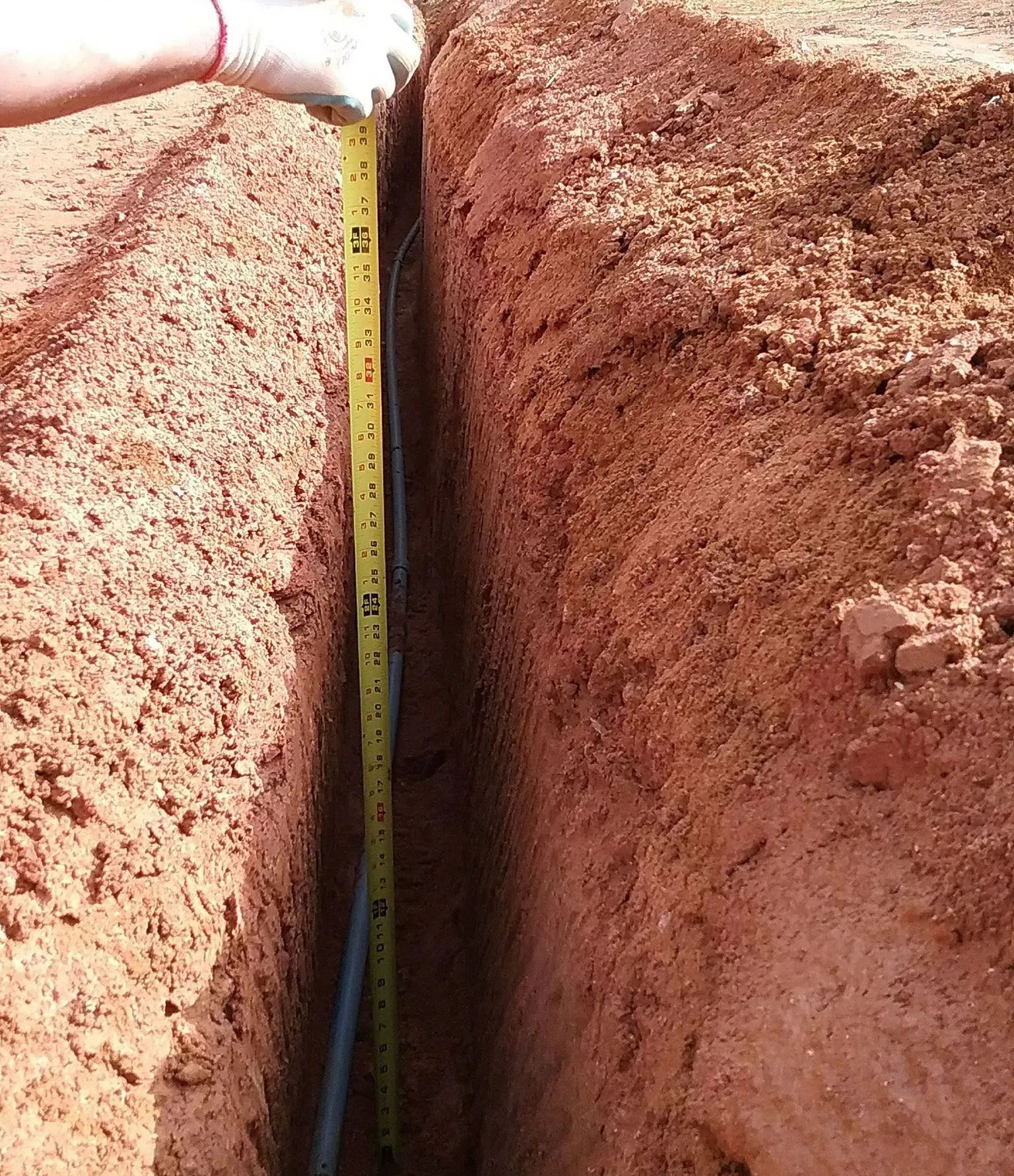
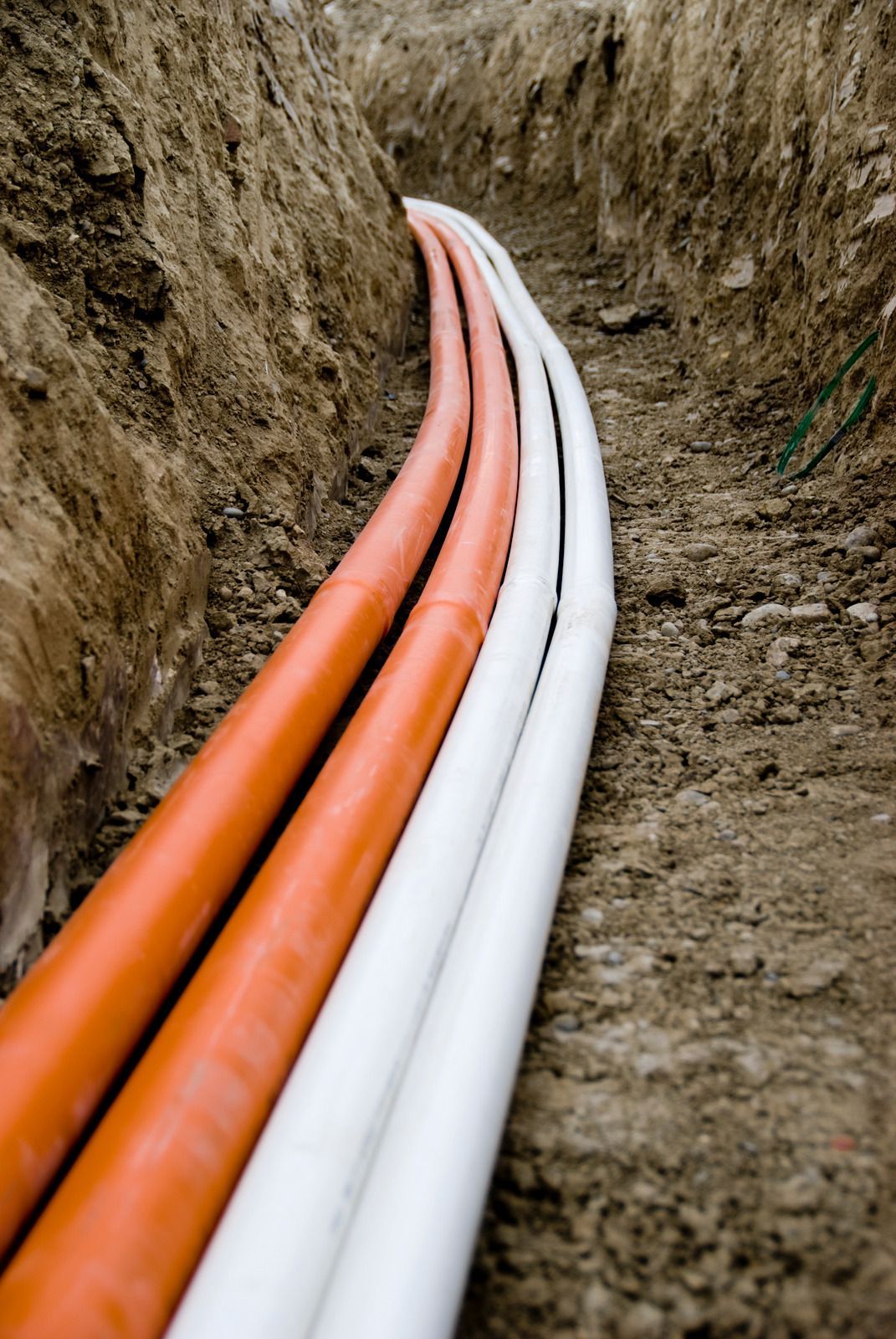
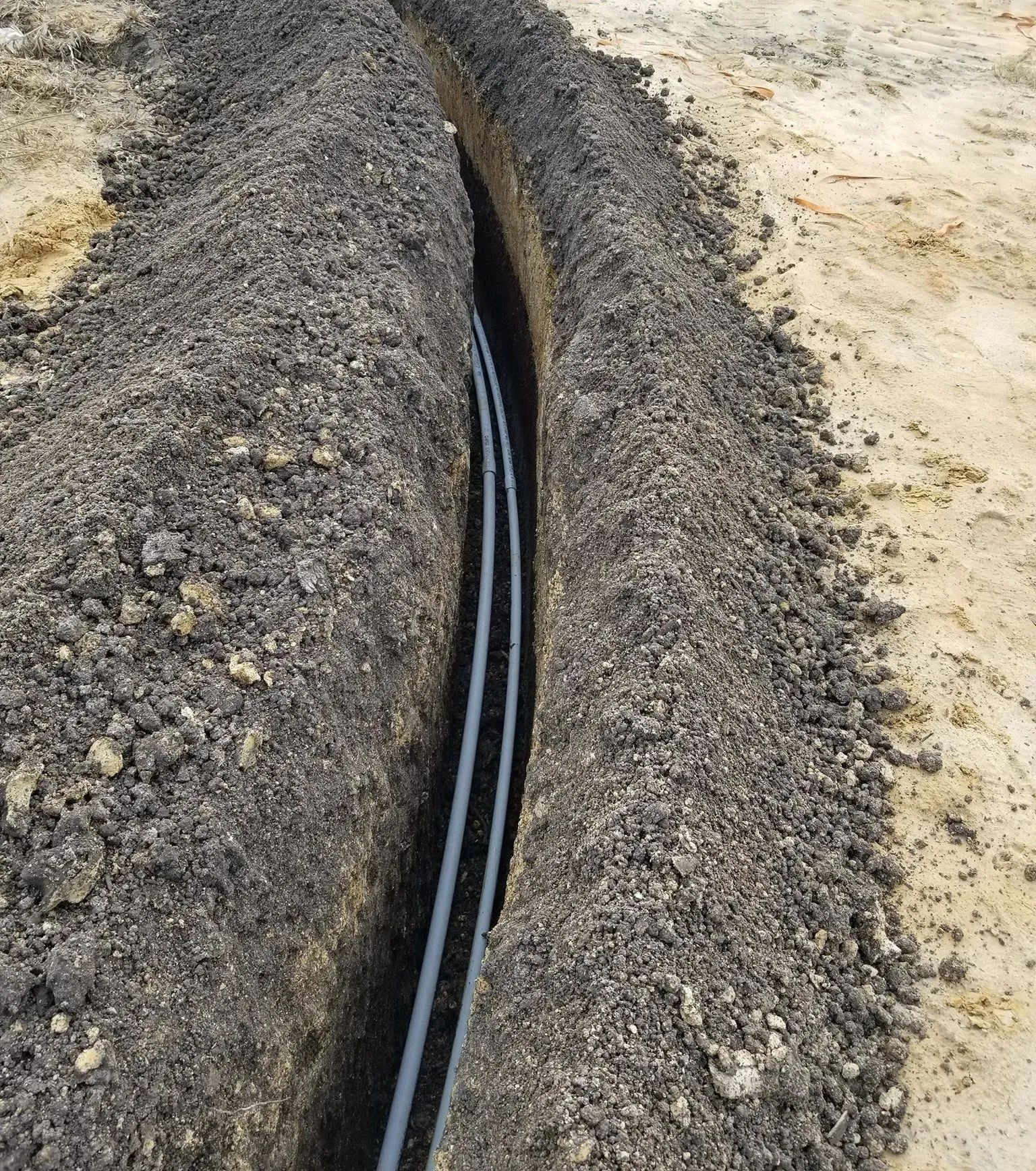
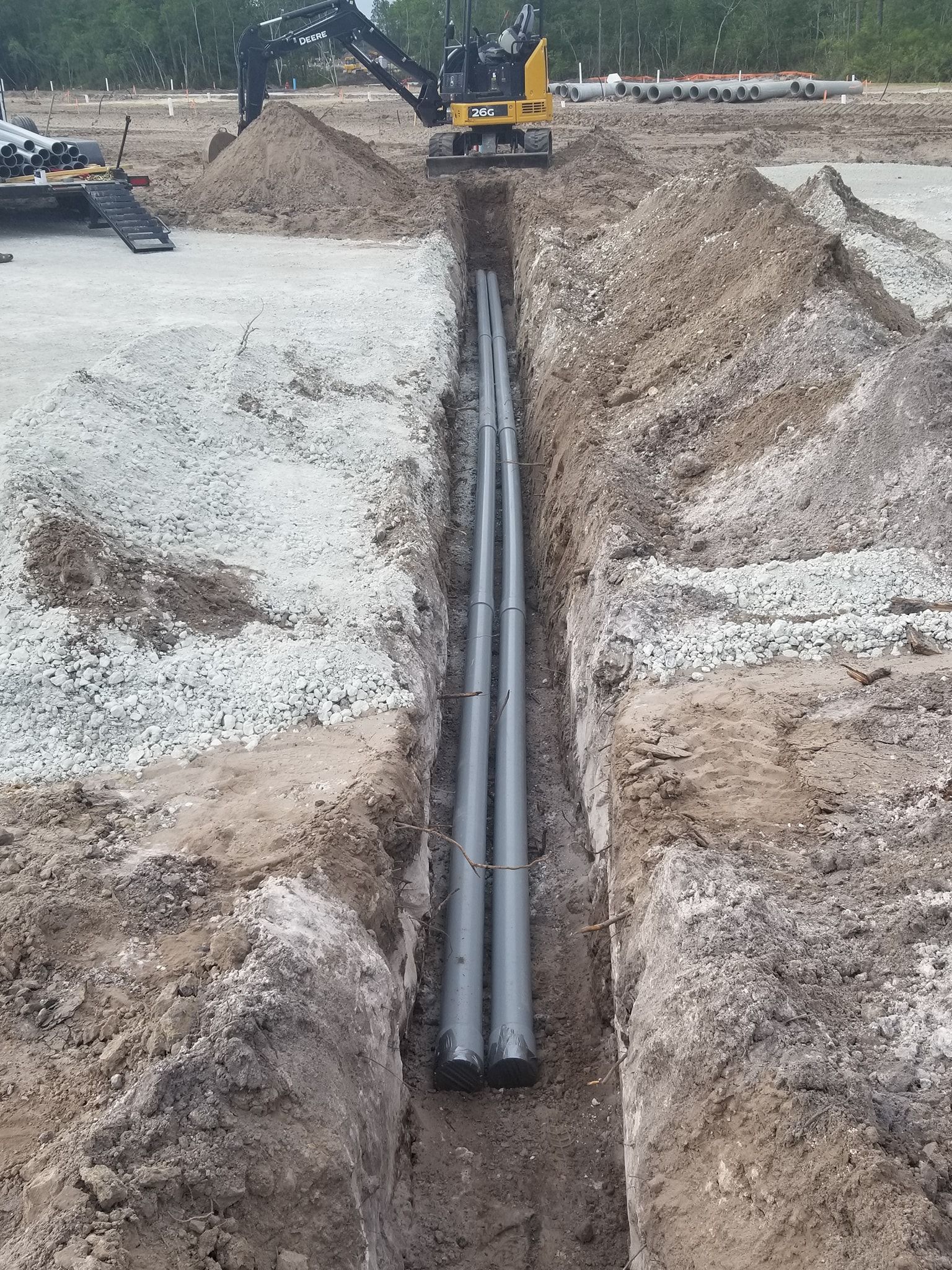
Trenching excavates an open channel along the entire route of the utility. The trench is dug to the depth the line needs, the conduit or pipe is placed, and then the trench is backfilled, compacted, and the surface restored. Because the whole run is open, the crew can see the line the entire way, hand-place bedding, stack multiple utilities at set separations, and verify grade directly. The tradeoff is that everything above the route gets disturbed and has to be put back.
Directional boring
Directional boring, also called horizontal directional drilling, installs the line without opening the route. The crew digs a small entry pit and a small exit pit, drills a pilot bore along a planned underground path between them, then enlarges the hole in reaming passes and pulls the product line back through. The surface between the pits, pavement, lawn, a driveway, a creek bank, stays intact. The tradeoff is less direct control over the line and a bore path that has to follow gentle curves rather than sharp bends
Read What Is Above the Route First
The single biggest factor is usually not underground at all. It is what sits on the surface along the route, because that is what you either protect or rebuild.
Crossings favor boring
When the route has to cross a road, a driveway, a finished parking lot, a sidewalk, or established landscaping with mature trees, boring earns its place. It slips the line underneath while the surface stays whole, so there is no saw-cutting, no pavement removal, and no restoration to schedule and warranty afterward. On a developed site, protecting an existing surface is often the whole reason to bore.
Open ground favors trenching
When the route runs through open, undeveloped dirt with nothing above it to protect, trenching is usually the faster, simpler choice. A long service run across a raw lot or an open field has no pavement to rebuild, so the disruption a trench causes costs you little. The open trench also lets the crew see and adjust the line the entire way, which matters when precise grade or tight utility separation is part of the spec.
Tip: Before committing to a method, walk the full route and mark every surface the line has to cross, not just the endpoints. A run that looks like a simple open trench on the plan often has a driveway apron or a paved apron partway across that changes the math. Flagging those crossings early lets us plan a bore for the crossings and a trench for the open stretches on the same job, instead of discovering the conflict once the machine is already on site.
Soil and Depth Change the Answer
Once you know what is above the route, the ground itself narrows the choice. The two methods respond to soil very differently, and that is where local conditions carry real weight.
Directional boring performs best in cohesive soil that holds the shape of the bore, which is one reason it works well in much of the Piedmont's clay. It struggles when the ground turns to loose gravel, cobbles, or solid rock, where the bore can wander or the hole can collapse before the line is pulled through. Trenching, by contrast, works in nearly every soil with the right machine, from soft clay to rock, though hard rock and hardpan slow a trench down and call for heavier teeth or a rock saw.
Depth and geometry matter too. Trenching handles almost any layout, including sharp turns, changes in depth, and stacking several utilities at set vertical separations in one open channel. A bore path cannot turn sharply. It has to follow the minimum radius the drill string allows, so a route with tight bends or frequent connections is often better trenched. Deep lines and long straight crossings, on the other hand, are natural bore candidates, since the bore holds a planned depth under an obstacle without opening a deep, wide trench that would need shoring.
Schedule, Access, and Site Conditions
Beyond surface and soil, the way a job runs day to day often decides the method, especially on a site where other trades are working around you.
For a straight, shallow run in open ground, trenching is typically quicker because there is no rig setup, pilot bore, and reaming sequence. For a crossing under a road or a finished surface, boring is frequently the faster path once you count everything trenching would require on top of the dig, the cutting, the backfill and compaction, and the surface rebuild. The comparison flips depending on whether the route is open or obstructed, which is why we look at each segment on its own.
Access and staging shape it as well. A bore rig needs room to set up at the entry pit and a clear line to the exit pit, plus space to manage drilling fluid. A trencher needs a clear path along the whole route and room to spoil the excavated soil. On a tight or active site, whichever machine you can actually stage and run without stopping other work often becomes the practical answer.
Warning: Before either method breaks ground, locate every existing line in the work zone. Calling a professional locate, then potholing or vacuum-excavating to expose utilities where the new route crosses them, is the single best way to avoid striking a gas, power, water, or fiber line. Treat it as standard practice on every job, bore or trench, no matter how well you think you know the site. A strike stops the whole project and puts people at risk.
How We Match Method to the Job
Piedmont ground has its own personality, and after 25 years working it we read the site conditions as much as the plans when we pick a method.
Red clay is the starting point. It holds a bore well, which makes directional boring a strong option for crossings here, and it holds a trench wall reasonably well when it is not saturated. The catch is water. Wet red clay turns slick and heavy, trench walls lose stability, and a site that drilled clean last week can turn to a mess after a Triad thunderstorm. We watch the weather window closely and plan the wetter, lower stretches of a route around it.
Rock and hardpan are the other wild card. Pockets of weathered rock and dense hardpan show up across the region, and they push the decision both ways depending on where they sit. A rock shelf right along an open route may still trench faster than fighting a bore that keeps deflecting off stone. A rock layer under a road we need to cross may call for specialized bore tooling instead. We evaluate what the ground is likely to hold before we commit, rather than assuming.
Often the best answer on a single job is both. We routinely bore the crossings, under the entrance drive, the road, the paved apron, and trench the open runs in between, so the surfaces that matter stay intact while the open ground gets the faster, cheaper dig. Matching each segment to its own conditions is how a route gets installed cleanly without tearing up more of the site than the work actually requires.
Frequently Asked Questions
What is the core difference between open-cut trenching and directional boring?
Trenching opens a continuous channel along the route, places the line, then backfills and restores the surface. Directional boring installs the line between small entry and exit pits, leaving the ground between undisturbed and protected.
When is boring the better choice for a job site?
Boring makes sense whenever the route crosses a surface worth keeping intact, such as a road, driveway, parking lot, or established landscaping. It also suits deep or long crossings where trenching would mean heavy excavation.
When does trenching make more sense than boring?
Trenching often works better for runs through open, undeveloped ground with nothing above them to protect, and for routes with sharp turns, changing depths, or several utilities stacked at set vertical separations along one channel.
How does Piedmont red clay affect the decision?
Red clay holds a bore path well, supporting directional boring for crossings here, and it holds a trench wall well when dry. Saturated clay turns slick and unstable, so wet weather often reshapes the schedule.
Can both methods be used on the same project?
Yes, and on many sites that is the smartest approach. We bore the crossings under drives, roads, and paved areas to keep those surfaces intact, then trench the open stretches where a dig costs little.
Why locate existing utilities before either method?
A strike on a live line stops the job and endangers the crew and anyone nearby. Calling 811 for a locate, then exposing crossing utilities before machinery advances, is standard practice on every underground job.
The Method Follows the Ground, Not the Habit
Every route tells its own story once you look past the plan and into the actual conditions waiting on site. Open ground with nothing above it favors a trench, since the crew can see the line, hold tight grade, and stack utilities where the spec calls for it. A finished driveway, a paved lot, or a mature tree line favors a bore, since the surface stays whole and the schedule avoids a rebuild. The right answer rarely comes from picking a favorite method before the walk. It comes from reading what each segment actually needs.
Piedmont ground adds its own layer to that reading. Red clay holds a bore cleanly and holds a trench wall well enough, until wet weather turns both into a different job overnight. Rock and hardpan push the decision further, sometimes toward
trenching, sometimes toward specialized bore tooling, depending on where the layer sits along the route. We have spent 25
years working this ground from our base in Whitsett, North Carolina, and Lighthouse Underground 2 brings that experience to every route, matching trenching and boring segment by segment so the site gets the cleanest install the ground allows.