
Conduit Trenching for Fire Alarm and Data Lines on a Commercial Build
September 30, 2026
Quick Answer: Conduit trenching for fire alarm and data lines is the work of opening a clean, properly graded trench, setting protective conduit at a consistent depth, adding pull boxes and handholes where the run needs them, and backfilling so the pathway stays intact for the life of the building. The trench itself is not complicated, but the pathway has to be right the first time because the electrician or low voltage contractor will be pulling cable through it long after the excavation crew has left. On Piedmont sites, red clay, hidden rock, and wet weather make it harder to hold grade and keep conduit straight, so the best results come from planning routes, crossings, and sequencing with your utility contractor before the first pass of the excavator.
If you manage commercial projects, you already know that fire alarm and data pathways rarely get the attention that power, water, and sewer get. They are small conduits carrying small cables, and on a schedule with a hundred moving parts they tend to be treated as an afterthought. Then the building is nearly finished, the fire alarm contractor shows up to pull cable to a detached pump house or a monitored gate, and the conduit is crushed, full of mud, or terminated in the wrong spot. Now you have a problem that involves a trench crew, an electrician, and a schedule that has no room for it.
We have spent more than 25 years trenching across the Triad and the rest of the Piedmont, and low voltage conduit runs are some of the most common places we see avoidable rework. This article walks through how to plan these trenches so the pathway is ready when the cable crews need it.
Why Fire Alarm and Data Conduit Is Its Own Kind of Trench
Power trenches get planned around load and depth. Water trenches get planned around fall and cover. Fire alarm and data trenches get planned around something different: keeping a pathway open, protected, and reachable for future work.
Signal Integrity And Survivability
Fire alarm circuits between buildings, remote annunciators, and monitored devices must keep working under site stress. Data lines serving card readers, cameras, or buildings must survive years of landscaping, paving, and repairs. Proper conduit installation protects both pathways.
Conduit Before Cable
Cable installation happens later. Conduit may be installed months earlier, often by another contractor. Problems can remain hidden after backfilling, including trapped water, accumulated silt, or unnoticed bends that prevent pull ropes and cables from passing through.
Shared Utility Corridors
Low voltage conduits often share corridors with power, irrigation, and site lighting. Keeping each pathway organized and properly separated reduces field confusion. This section focuses specifically on reliable low voltage pathways rather than overall utility depth or separation requirements.
Planning the Route Before You Mobilize
The easiest place to fix a routing problem is on the drawing. The hardest is in an open trench with a crew standing by.
Start With Every Termination Point
List every location where conduit must end, including control rooms, remote panels, detached buildings, gate operators, monitored equipment, telecom points, and pole-mounted devices. Missing a termination can require additional branches and costly route changes later.
Walk The Route With The Low Voltage Contractor
Before finalizing the layout, have fire alarm and data contractors walk the proposed route with your trench crew. They can identify difficult cable pulls, necessary pull boxes, and problematic bends before installation begins.
Flag Every Crossing
Mark every driveway, parking area, drive aisle, and utility crossing on the plan. Pavement crossings may require different methods, and directional boring can sometimes avoid cutting and patching existing surfaces altogether.
Confirm What Is Already In The Ground
Existing underground utilities may not match the drawings. Locate all existing lines before excavation to reduce the risk of striking unmarked utilities and keep the low voltage trench installation safe.
Decide The Conduit Count And Spare Capacity Early
Adding spare conduit during excavation is relatively simple, but doing it after paving becomes expensive. Discuss future requirements with the owner and low voltage contractors before backfilling begins.
Building the Trench So the Conduit Stays Straight
A clean trench is the foundation of a clean pathway. Small conduit is flexible enough to sag and shift, and once it is buried, you cannot see what it is doing.
Grade The Trench Bottom
Keep the trench bottom even, removing rocks and roots, while directing drainage toward a handhole or low point. Avoid dips and rises that create belly points where water and silt collect.
Set Consistent Depth
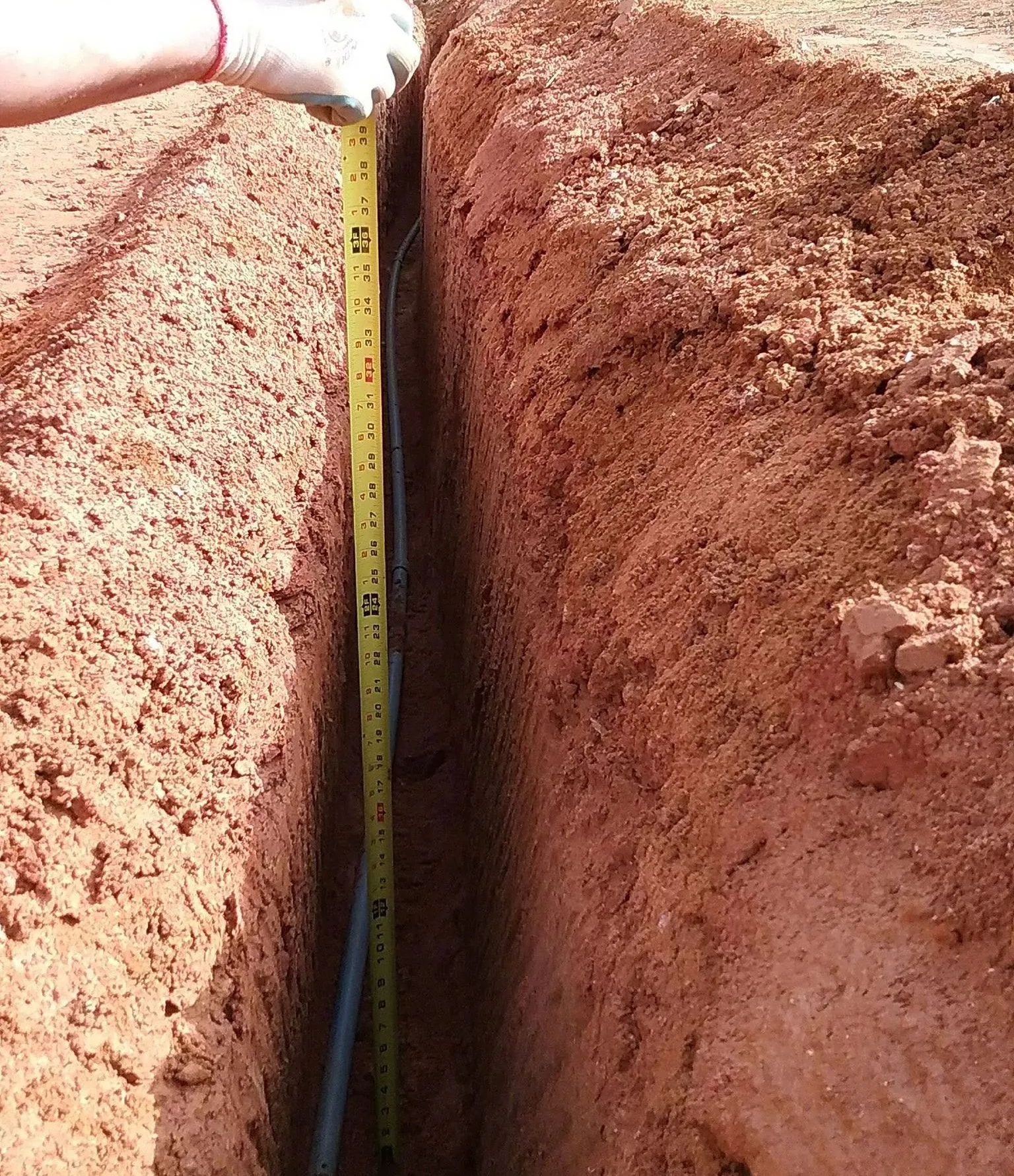
Maintain consistent conduit depth to protect against surface activity and future digging. Follow project plans for depth requirements and check measurements at intervals while the trench remains open.
Use Proper Bedding
Place clean bedding beneath and around conduit to prevent damage from sharp rocks, hard clay clods, backfill pressure, or settling. Proper support becomes especially important on rocky Piedmont ground.
Keep Sweeps Gentle
Use long radius sweeps at direction changes and risers to simplify cable pulls and protect cable jackets. Tight elbows can make installation difficult, particularly with fiber and data cables requiring careful bend control.
Place Pull Boxes And Handholes Strategically
Install pull boxes and handholes where cable pulls become long or multiple bends accumulate. Adding access points during trenching is easier than retrofitting them later. Confirm locations with the low voltage contractor beforehand.
Install A Pull String Or Line
Leave a pull string inside every conduit to simplify future cable installation and confirm the pathway remained open during burial. Cap both ends securely to prevent mud and water from entering.
Tip: Before you close a low voltage conduit run, have someone pass a mandrel or proving line through it and confirm it moves freely end to end. Catching a crushed or misaligned section while the trench is still open takes minutes. Catching it after backfill and paving means reopening the ground.
Separating Fire Alarm, Data, and Power Runs
Mixing pathways is one of the fastest ways to create interference and confusion. Data and fire alarm circuits are sensitive to electrical noise, and a crowded corridor makes it easy to hit the wrong line later.
Give Low Voltage Its Own Conduit
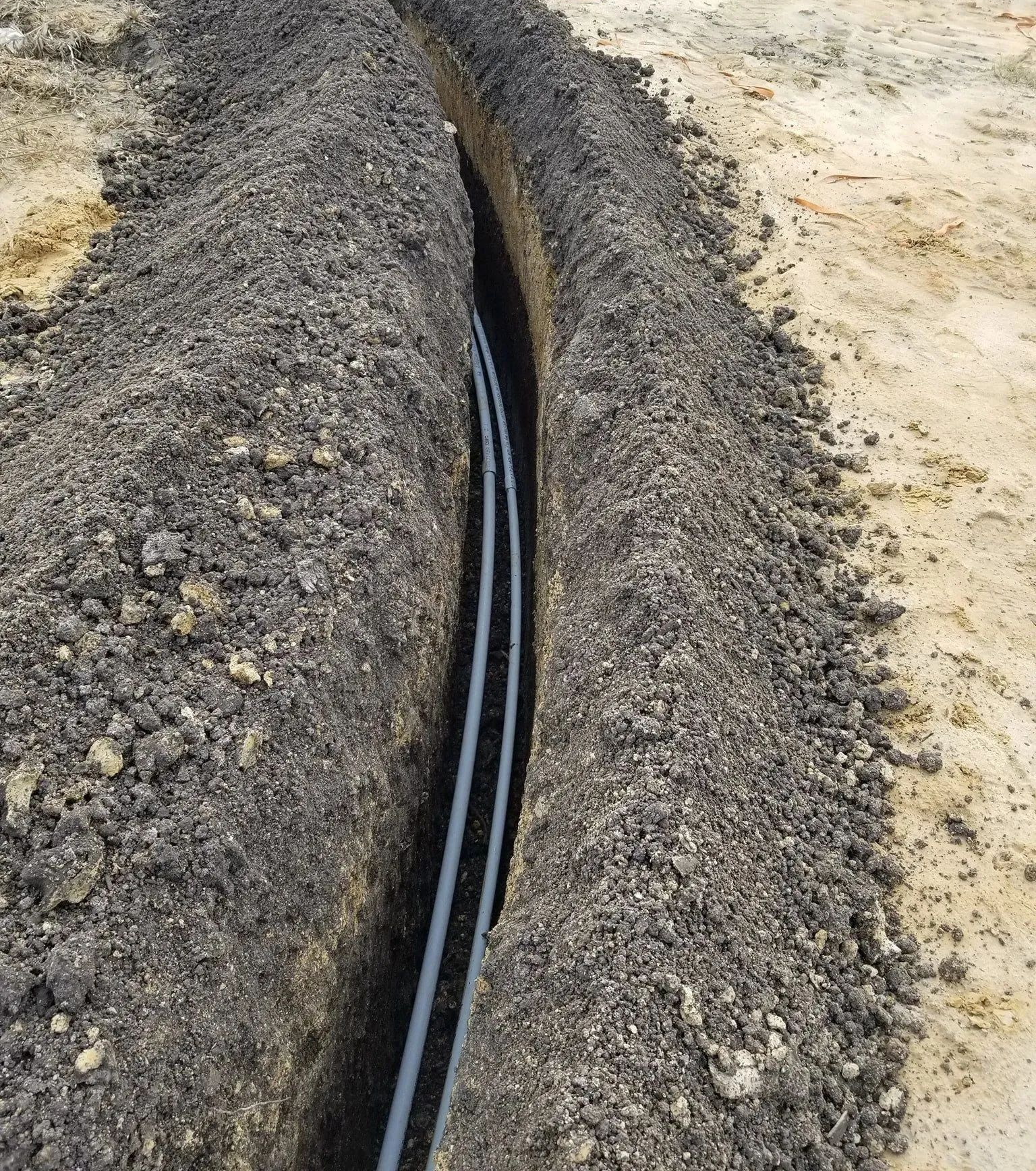
Keep fire alarm and data lines in dedicated conduit rather than sharing with power. Separate pathways protect signal quality, simplify troubleshooting, and make future modifications easier to manage.
Keep Clear Spacing From Power Conduit
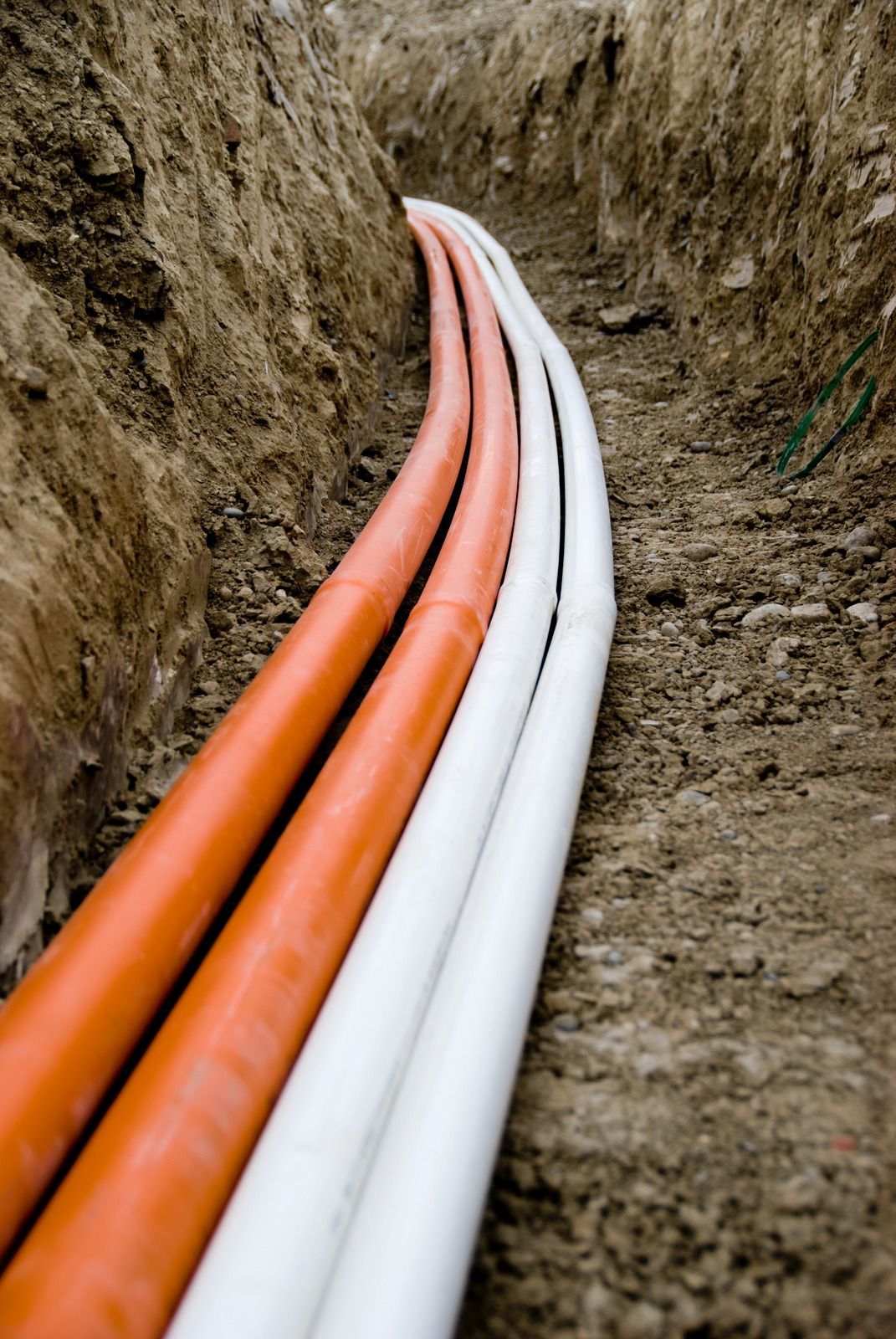
Maintain meaningful horizontal separation between low voltage and power conduits. Cross them at right angles where possible, following spacing requirements established by the electrical designer and contractor.
Mark And Label Everything
Use warning tape above conduit, tracer wire when required, and clear labels at handholes and pull boxes. Good identification helps future crews understand exactly where each pathway leads.
Photograph Before Backfill
Photograph the open trench before backfilling, including tape measure references showing depth, spacing, and conduit layout. These records provide useful documentation when future repairs, landscaping, or modifications disturb the site.
What Piedmont Soil and Weather Do to Conduit Trenches
Central North Carolina is hard on trenches because of its soil and weather. The same trench that goes smoothly on a dry week can turn into a slog after a few days of rain.
Red Clay Holds Water And Shifts
Red clay can slump when wet, making trenches difficult to grade. Waiting for drainage or dewatering before installation helps prevent conduit movement and uneven backfill compaction.
Rock And Hardpan Show Up Without Warning
Rock and hardpan can appear unexpectedly around Greensboro, High Point, Burlington, Asheboro, and Lexington. Routing around obstacles or breaking through changes conduit placement, making proper bedding important.
Wet Weather Affects Sequencing
Rain can leave trenches exposed longer, allowing runoff, silt, and debris inside unsealed conduit. Capping ends, limiting open trench lengths, and backfilling promptly reduces contamination risks.
Settling Shows Up Over Time
Wet or poorly compacted backfill can settle beneath future paving, pulling conduit out of alignment or creating low spots. Placing backfill in lifts and compacting properly helps prevent movement.
Warning: Do not accept a low voltage conduit run as finished just because it is buried. Silt, mud, and crushed sections are invisible from the surface, and a pathway that is blocked when the cable crew arrives leaves you with a second mobilization and a schedule delay. Confirm the pathway is clear and capped before the trench is closed.
Building the Trench So the Conduit Stays Straight
A clean trench is the foundation of a clean pathway. Small conduit is flexible enough to sag and shift, and once it is buried, you cannot see what it is doing.
Grade The Trench Bottom
Keep the trench bottom even, removing rocks and roots, while directing drainage toward a handhole or low point. Avoid dips and rises that create belly points where water and silt collect.
Set Consistent Depth
Maintain consistent conduit depth to protect against surface activity and future digging. Follow project plans for depth requirements and check measurements at intervals while the trench remains open.
Use Proper Bedding
Place clean bedding beneath and around conduit to prevent damage from sharp rocks, hard clay clods, backfill pressure, or settling. Proper support becomes especially important on rocky Piedmont ground.
Keep Sweeps Gentle
Use long radius sweeps at direction changes and risers to simplify cable pulls and protect cable jackets. Tight elbows can make installation difficult, particularly with fiber and data cables requiring careful bend control.
Place Pull Boxes And Handholes Strategically
Install pull boxes and handholes where cable pulls become long or multiple bends accumulate. Adding access points during trenching is easier than retrofitting them later. Confirm locations with the low voltage contractor beforehand.
Install A Pull String Or Line
Leave a pull string inside every conduit to simplify future cable installation and confirm the pathway remained open during burial. Cap both ends securely to prevent mud and water from entering.
Tip: Before you close a low voltage conduit run, have someone pass a mandrel or proving line through it and confirm it moves freely end to end. Catching a crushed or misaligned section while the trench is still open takes minutes. Catching it after backfill and paving means reopening the ground.
Sequencing With Other Trades on a Commercial Build
Commercial sites run on overlapping schedules, and trench work sits in the middle of them. A low voltage trench that ignores what is happening around it will get run over, filled, or dug up.
Get Ahead Of Paving And Concrete
Install conduit crossings before future drive aisles or slabs are poured. Otherwise, later work may require cutting or boring, adding time and coordination to the project.
Coordinate With The Electrician
Agree beforehand who handles trenching, conduit installation, backfilling, and signoff. Clear responsibilities prevent handoff confusion and help keep open trenches from remaining exposed longer than necessary.
Stage The Work In Logical Sections
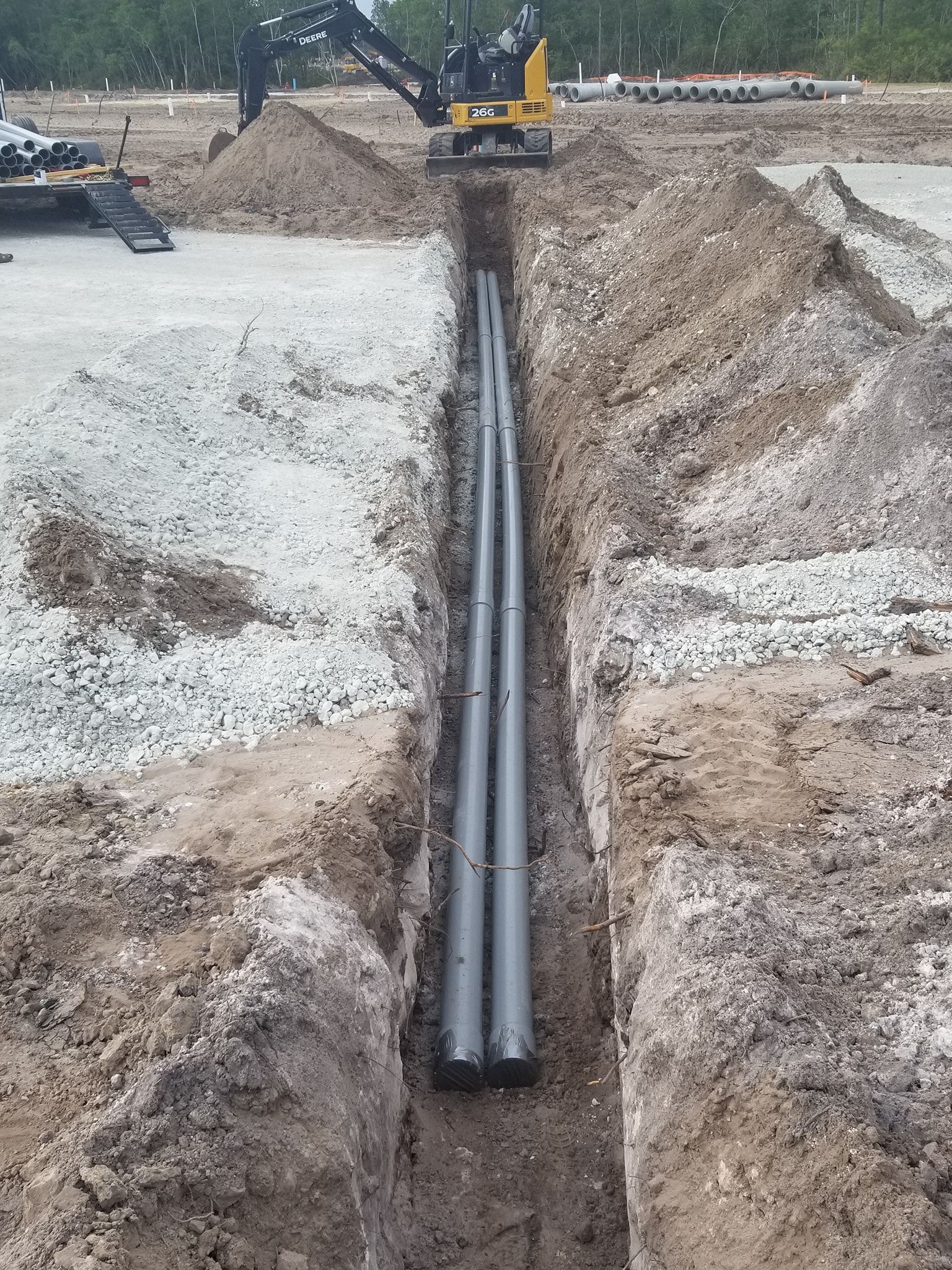
Avoid opening the entire route simultaneously. Complete conduit installation and backfill in manageable sections before advancing, reducing weather exposure, trade conflicts, and unnecessary site disruption.
Protect Open Trenches
Open trenches create hazards on busy commercial sites with vehicles, deliveries, and subcontractors. Use barriers, visible markings, and shorter open sections to keep people and equipment safely away.
Close The Loop With Documentation
Document conduit routes, depths, handhole locations, and the purpose of each pathway. Give these records to the owner and low voltage contractors for easier future service.
When the Route Does Not Suit an Open Trench
Not every low voltage run belongs in an open cut. Some routes cross busy drive lanes, mature trees, or hardscape that is hard to disturb. In those cases directional boring can carry conduit under the obstacle and keep the surface intact. Long straight runs across open ground can sometimes be handled by plowing. The right choice depends on the site, the soil, the schedule, and what needs to stay undisturbed, and a good utility contractor will help you weigh the options rather than defaulting to one method.
Working With Your Utility Contractor on Low Voltage Runs
The best low voltage conduit installations come from early conversations. Bring your trench contractor in when the site plan is still flexible, share the termination list, and ask where they see conflicts. A crew that has trenched hundreds of miles in Piedmont conditions can point out rock zones, drainage problems, and crossing challenges long before they become schedule problems.
Ask for a plan that covers depth verification, bedding, capping, spare conduit, and documentation. Ask what happens if conditions in the ground do not match the drawings. The answer tells you whether the crew has a plan for the unexpected or is hoping for a clean site.
Frequently Asked Questions
Can fire alarm and data conduit share the same trench?
Yes, they commonly share a corridor, but each should have its own conduit and adequate spacing from power runs. Sharing a trench saves disturbance, and keeping the conduits separate protects signal quality and makes future service easier.
Why does a low voltage trench need bedding if the conduit is small?
Small conduit is easier to crush or deform than large pipe, and rock or hard clay clods can damage it under backfill weight. Clean bedding around the conduit supports it and keeps the pathway open for cable.
How do you keep water out of buried conduit?
Grade the trench so water drains to a handhole or low point, cap conduit ends during construction, seal connections properly, and backfill promptly. In Piedmont clay, standing trench water is the most common cause of silt and moisture inside conduit.
Should we install spare conduit while the trench is open?
Usually yes. A spare conduit is a small job while the trench is open and saves a major disturbance later. Talk with the owner and the low voltage contractors about likely future needs before backfill.
What if we hit rock while trenching for conduit?
Rock and hardpan are common in parts of the Triad. The crew can adjust the route, break through, or bore around it, and each option affects depth and layout. Extra bedding protects the conduit from sharp rock edges either way.
When is boring better than an open trench for a conduit run?
When the route crosses pavement, mature trees, or finished hardscape that should stay undisturbed, boring can carry the conduit underneath. Open trenching tends to suit long runs across open ground where the surface can be restored easily.
Who should verify the pathway is clear before backfill?
Ideally the trench crew and the low voltage contractor together. Passing a proving line or mandrel through each conduit and capping the ends confirms the pathway is open before the ground is closed.
A Clear Pathway Starts Long Before Cable Day
Fire alarm and data conduit may carry the smallest cables on a commercial site, but the pathway around them has to stay open, dry, and reachable for decades. A graded trench bottom, clean bedding, gentle sweeps, well placed handholes, and capped ends all protect a run that might not see a pull rope for months. When routes, crossings, and sequencing are settled early, the cable crews arrive to find a clear pathway instead of a crushed conduit and a second mobilization.
Over 25
years of
trenching
from our base in Whitsett, NC, we have learned that Piedmont ground rarely matches the drawings exactly. Red clay slumps after a wet week, hardpan appears where no one expected it, and open trenches collect silt faster than anyone plans for. At Lighthouse Underground 2, we treat every low voltage run as a pathway someone else will depend on later, which is why each conduit is proved, capped, and documented before the ground closes over it.